Cart
0
your cart

No items found.
Product is not available in this quantity.

If you're thinking about buying popcorn to snack on, then you're probably wondering where do popcorn kernels come from. The answer is very important.
Popcorn kernels are made of three main components: the hard outer shell called the pericarp, the starch granules inside the endosperm, and water. These three components work together to produce the delicious, crunchy popcorn.
The pericarp is made of tough cellulose fibers and contains a germ. Upon heating the kernel, the pericarp ruptures at approximately 135 psi. This pressure increases with increased temperature.
Endosperm is a mixture of soft and hard starch granules. It is a source of energy for the living kernel part. During the popping process, the water trapped in the endosperm expands, turning into steam.
When the kernel cools down, the water in the kernel softens and a flake forms. This flake is then cooked as steam passes through. As it turns into puffy foam, the steam is converted to heat, cooking the corn.
Typically, popcorn kernels contain about 14 percent water. The ideal moisture level is between 16 and 20 percent. If the kernel is dried too quickly, stress cracks will develop.
Popcorn is a popular snack food around the world. The popped grain is often used in infant foods.
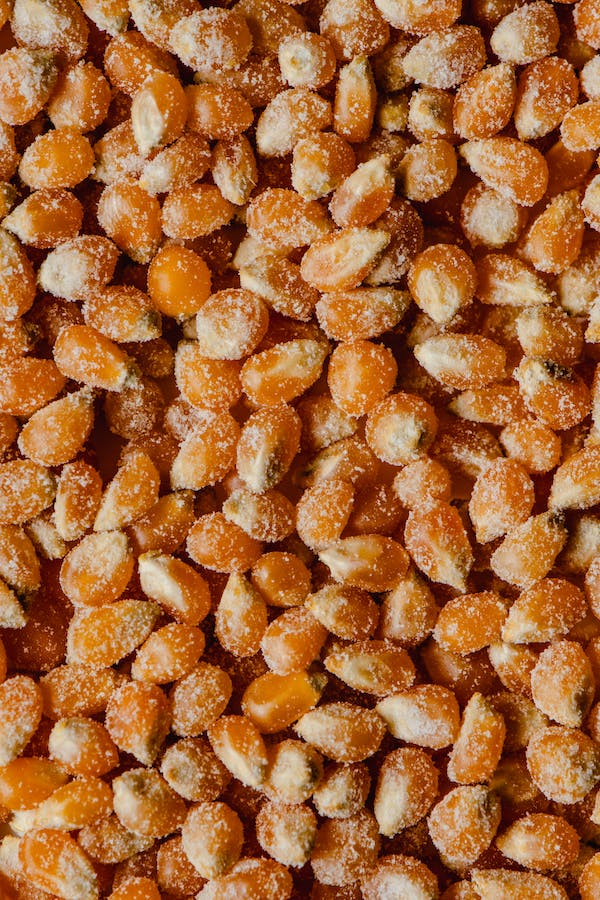
Popcorn is a special type of corn that pops. It is a cereal grain that is consumed in many parts of the world. The United States grows the largest volume of popcorn worldwide. In 1997, the US produced about 996 million shelled pounds of popcorn.
There are three basic components to popcorn: the kernel, the pericarp, and the endosperm. These components must be properly balanced in order for the corn to pop.
In the Midwest, popcorn is grown in Indiana, Ohio, Iowa, Illinois, and Kentucky. However, popcorn is also grown in other parts of the world.
Historically, popcorn has been grown throughout the world. Some of the earliest varieties of popcorn are thought to have originated in Asia and Sumatra before reaching North America. Archeologists have discovered remnants of popcorn in Mexico dating back to 3600 BC.
Popcorn is an important part of the diet of Native American tribes. They used it as a dietary supplement, and in jewelry and headdresses. During World War II, popcorn was used as a candy substitute.
Popcorn is one of the most commonly consumed food products in the United States. An average person consumes about 71 quarts (67 liters) of popcorn per year.
If you love popcorn, you've probably wondered about some fun facts about popcorn kernels. Popcorn is a type of corn that pops, and is a popular snack around the world. Besides being delicious, popcorn is also nutritious and low in calories.
During World War II, the USA ate three times more popped corn than it did in the pre-war years. Today, popcorn is a staple at movie theaters and state fairs.
Popcorn was first introduced to Europe by Christopher Columbus in the late 15th century. It has been enjoyed as a food in the United States for over five thousand years. Some tribes in North America even believed that each kernel of popcorn was home to a little spirit.
When popcorn is popped, the nucleus inside the kernel becomes hot and expands. As the heat builds up, the water within the kernel turns into steam. This steam causes the corn to pop.
The term "popcorn" comes from a specific type of corn called flint corn. A single piece of popcorn can pop up to three feet high.
Popcorn kernels are considered a whole grain, which means that they contain a variety of nutrients. They are loaded with dietary fiber and potassium, among other things.
The hulls of popcorn kernels contain polyphenols, which are plant compounds that act as antioxidants. These antioxidants are important for fighting disease.
Some people find that eating popcorn can cause indigestion. This can include gas, bloating, and cramping. To avoid the symptoms of indigestion, be sure to check the labels on your popcorn.
If you are allergic to corn, you should not eat popcorn. Also, if you are suffering from irritable bowel syndrome, it is a good idea to avoid eating popcorn.
The health benefits of popcorn kernels may be diminished by the addition of butter or salt. Salt can be unhealthy, and butter can add saturated fats.
You can make popcorn healthier by popping it on the stove instead of in the microwave. Choose a heavy bottom pan with a lid. Cook the kernels on medium-high heat. Add a little oil to the pan.
If you enjoy snacking on popcorn, it is a good idea to try adding nutritional yeast to the mixture. Nutritional yeast is full of protein and B vitamins.
Popcorn is one of the most popular snacks in the world. Not only is it an enjoyable, delicious, and cheap snack, but it is also loaded with important nutrients.
Popcorn contains a number of important nutrients, including niacin, vitamin B3, and riboflavin. It is also rich in fiber, which can help keep you full for a longer period of time.
Another benefit of popcorn is that it has relatively low calories. A 100-gram serving of the unpopped variety has a mere 370 calories.
But it is important to be aware that not all popcorn is created equal. Some types of pre-packaged popcorn contain added sugar and unhealthy trans fats. If you want to eat a healthy snack, stick to plain popcorn and avoid any toppings that contain butter or salt.
A 2-tablespoon serving of the unpopped kernels has about 22 grams of carbohydrates, 3 grams of protein, and 1.5 grams of fat. Of course, this is still only a small fraction of the total daily calorie intake.
Whole grains are an important part of a healthful diet. They are also rich in vitamins, minerals, and fiber. And consuming whole grains helps reduce the risk of heart disease.
If you are in the market for a new snack, popcorn can be a great choice. It is packed with nutrients and antioxidants. Popcorn is also low in calories. However, it is important to understand what kind of corn you are popping before you decide to purchase it.
Sweet corn is a cereal grain that can be found in many stores. Sweet corn has a starchy flavor that pairs well with savory ingredients. This is the most common type of corn in the United States.
A fun fact about sweet corn is that it is the only variety of corn that is naturally suitable for popping. In order to pop this variety, you will need to make sure that the moisture content of the corn is less than 25 percent.
The first step is to remove the husk from the corn. You can do this with a sharp knife. The husk protects the kernels and helps them stay intact.
Popcorn is an excellent source of fiber. This fiber helps keep you full longer and lowers your risk of heart disease.
If you are planning on making popcorn, you may be wondering where the kernels are from. Popcorn kernels come from a special kind of corn. The seeds of the corn have a starchy endosperm inside them.
To pop, the kernels must have a moisture content of about 14 percent. As they age, they lose moisture. This can cause the popcorn to taste different. It is a good idea to use new kernels instead of old ones.
There are different strains of pop corn, depending on their texture and appearance. They are cultivated for insect resistance, easy growth, and sturdy stalks. In addition, hybrids are cultivated for specific purposes.
Generally, popcorn kernels are stored in a cool, dark place. You should also avoid storing them near heat sources. Otherwise, the kernels will dry out and go bad.
When popping popcorn, you should always check the moisture content of the kernels. You can estimate the moisture content by weighing the kernels before and after you pop them. A standard moisture percentage is around 15 to 20 percent.
A lot of people wonder where the popcorn kernels come from. Well, you can't answer that question for sure. You have to look at the process of popping and storage. If you want to answer the question "where is popcorn made?", there's no doubt you'll need to know more about the process.
The best way to do that is to take a walk around your local supermarket or grocery store. This will provide you with the opportunity to ask questions, collect data, and even see what's on offer before you buy. In the end, you'll have a better idea of how to best serve your family's tummies. For example, it may be helpful to ask your grocer to keep popcorn in separate bins. That way, you can avoid the hassle of trying to unwrap a bundle of corn. Likewise, you can avoid the headaches that come from trying to fit the contents into your mouth.
What's more, you can experiment with a variety of corn based snacks without the worry of triggering an allergic reaction. If you're looking for the best of the best, you might also consider an air-popped popcorn.
#Mansfield #FarmersMarket #MansfieldFarmersMarket
More at: https://www.google.co.nz/travel/entity/key/ChgIp4eB2qzdz7tTGgwvZy8xaGM3ZHczdDgQBA